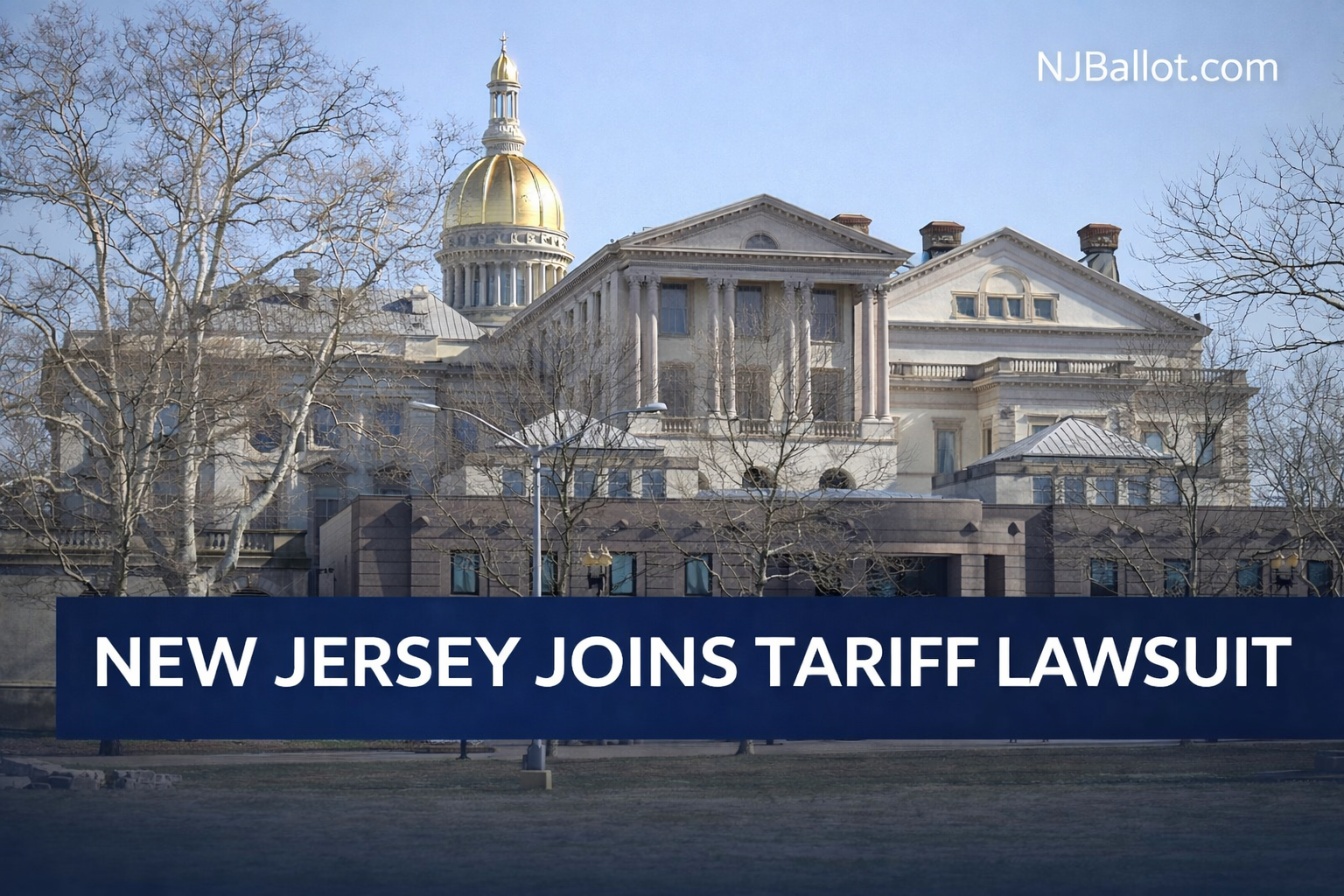

TRENTON—New Jersey Attorney General Jennifer Davenport has joined 24 states suing to block the Trump administration's 15 percent tariffs on most imported products worldwide. The coalition filed suit March 6 in the U.S. Court of International Trade, arguing that President Donald Trump lacked congressional authority to impose the duties.
The case is State of Oregon, et al., v. Trump, et al. Oregon, Arizona, California and New York serve as lead plaintiffs, while defendants include the President, the Department of Homeland Security and U.S. Customs and Border Protection. New Jersey joined 21 other attorneys general plus the governors of Kentucky and Pennsylvania.
Sherrill: Tariffs Worsen Affordability Crisis
Governor Mikie Sherrill framed the challenge as consumer protection. "Like the rest of our country, New Jersey is in the midst of an affordability crisis," Sherrill said. "Yet instead of finding ways to lower the costs of groceries or utilities, President Trump is back to levying unlawful tariffs—again."
Attorney General Davenport also said the duties will increase costs for New Jersey families and
businesses. "Tariffs raise prices for hard-working families and
businesses across New Jersey," Davenport said. "I will keep
fighting against the imposition of unnecessary and illegal costs on
our consumers."
The states cite Federal Reserve Bank of New York research finding nearly 90 percent of prior tariff costs were paid by American consumers and businesses rather than foreign exporters. The bank estimated duties cost households approximately $1,200 annually.
Rare Bipartisan Coalition Spans Progressive and Conservative States
The lawsuit's coalition spans the political spectrum from progressive coastal states to conservative heartland governors.
Kentucky Governor Andy Beshear—a Democrat in a Republican-leaning state—joined alongside progressive governors. This bipartisanship reflects the geographic distribution of manufacturing and agricultural interests affected by duties.
White House spokesperson Kush Desai defended the action. "The President is using his authority granted by Congress to address fundamental international payments problems," Desai said. "The Administration will vigorously defend the President's action in court."
Legal Strategy Targets Obscure 1974 Trade Provision
The lawsuit targets Section 122 of the Trade Act of 1974. Trump invoked the provision February 24 after the Supreme Court rejected an earlier tariff attempt February 20.
Section 122 has never been used to impose broad tariffs in the nearly 51 years since its enactment. The provision allows the president to address "large and serious balance-of-payments deficits" but was designed for currency crises during the gold standard era. The states contend trade deficits are "conceptually distinct" from balance-of-payments problems.
The duties apply to most imported products worldwide but exempt Canada, Mexico and several Central American nations. An 84-page exemption list covers specific products. They are set to expire after 150 days unless Congress extends them.
Oregon AG Dan Rayfield said the states want to stop the duties quickly. "The focus right now should be on paying people back, not doubling down on illegal tariffs," Rayfield said.
The lawsuit does not specify damages sought. Trade cases typically seek declaratory judgments and injunctions rather than monetary awards. If successful the ruling would invalidate the duties nationwide—not just for coalition states. Court of International Trade cases typically move faster than general federal litigation due to the time-sensitive nature of tariff impacts.
NJ Faces 45% Spike in State Procurement Costs
The lawsuit arrives as New Jersey faces a projected $250 million municipal budget crisis in Jersey City. Statewide and municipal budget concerns have dominated Sherrill's early policy agenda. New Jersey faces particular budget pressures under the tariffs, which could lead state purchases of trucks, uniforms and equipment to cost up to 45 percent more.
New Jersey's participation continues Davenport's pattern of litigation against federal policies. Governor Sherrill appointed Davenport in January after Matt Platkin's resignation. Sherrill's Executive Order 12, signed on February 11, restricted ICE use of New Jersey state property. That order prompted a separate federal lawsuit by the Department of Justice.
The tariff challenge represents a different front in state-federal conflicts under the Sherrill administration.
Subscribe to NJBallot.com for more information on this developing story.
Sources: New Jersey Attorney General's Office, U.S. Court of International Trade filings, White House Office of Communications, Federal Reserve Bank of New York research