
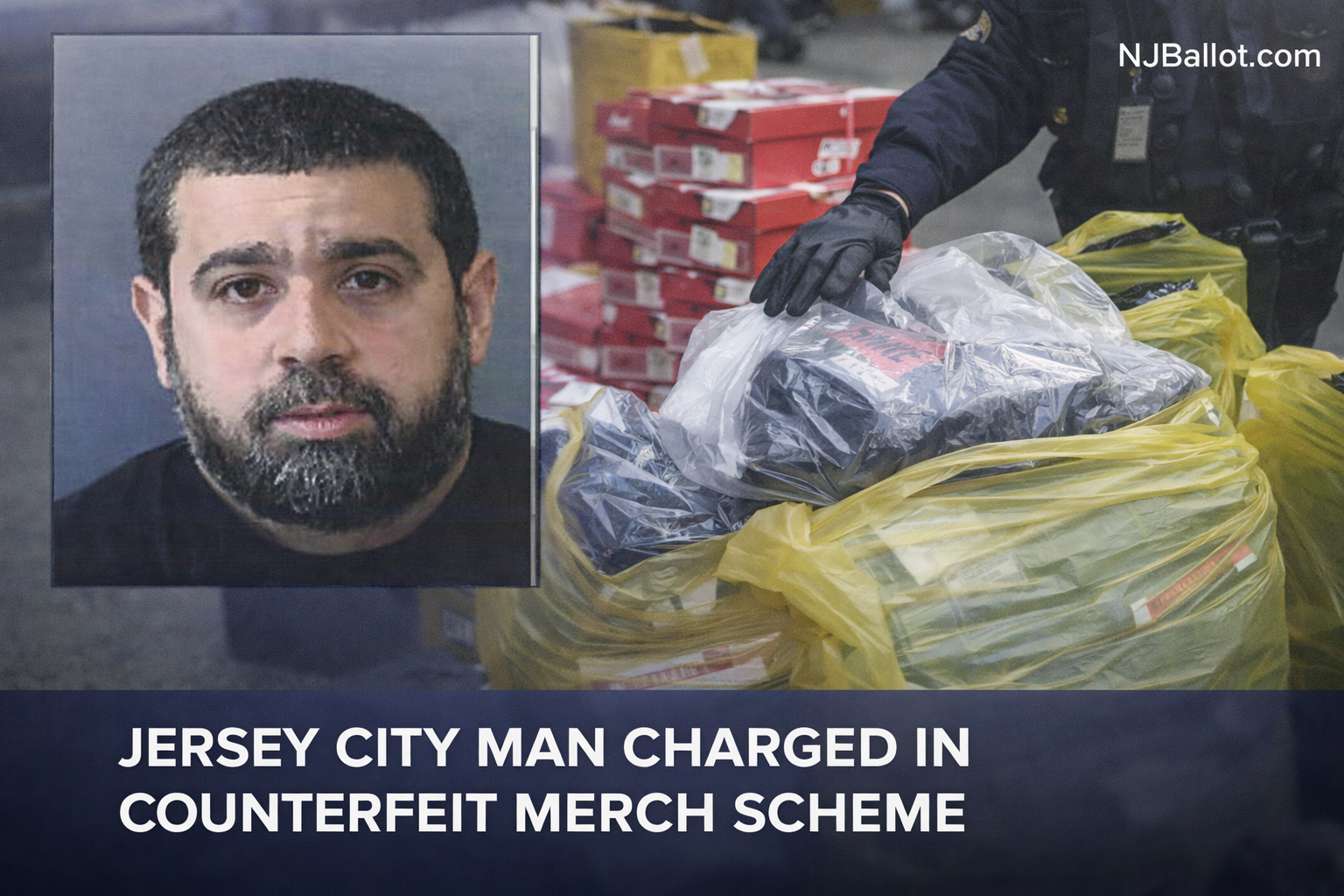

LODI—A Jersey City man who posed as a fashion designer was arrested last week after a multi-county task force found more than 1,400 pieces of counterfeit sports merchandise in his mother's Bergen County garage.
Christopher Patire, 39, was charged on March 20 with second-degree counterfeiting under N.J.S.A. 2C:21-32 following the March 11 raid Lodi. The Essex County Prosecutor's Office Financial Crimes Unit executed the search through the NJ Regional Operations and Intelligence Center (NJROIC) which coordinates investigations across county lines.
Items’ Value Below Federal Threshold
The seized items had an estimated street value exceeding $62,000. They featured altered sports league logos combined with Patire's "CrisP NYC" branding, according to Prosecutor Theodore N. Stephens II. Patire allegedly sold the merchandise through his website and social media accounts, including Instagram.
The case stayed at the state level because it fell below federal thresholds for trademark enforcement. ICE Homeland Security Investigations typically pursues cases exceeding $100,000 in value or involving international importation through ports like Newark-Elizabeth where 380,000 pairs of counterfeit Air Jordans were seized in 2018 representing $73 million in value. Patire's operation utilized a residential garage and social media sales, suggesting localized distribution without the international shipping nexus that triggers federal jurisdiction.
Patire marketed the brand through interviews with Miami-based publications where he described himself as an "Entrepreneur & Fashion Designer" selling athletic-themed streetwear. Photos published by Daily Voice show Patire posing with rapper Meek Mill and displaying CrisP-branded shorts though the images do not confirm Mill knew of the counterfeit operation or was compensated for the appearance.
Some Fake Merch Linked to Health Risks
Counterfeit sports apparel has been found to pose documented health risks in independent laboratory testing, though no injuries have been reported in connection with Patire's operation. A 2026 study by the American Apparel and Footwear Association and Intertek found 41% of tested counterfeit clothing failed U.S. safety standards, with some items containing lead at 191 parts per million and diethyl phthalate at levels 650 times over regulatory limits. Trading Standards officials in the United Kingdom have warned that fake football kits can cause skin irritation and rashes from toxic dyes and unknown manufacturing chemicals.
The Essex County Prosecutor's Office has not disclosed whether laboratory testing identified specific chemical hazards in the seized merchandise nor have they identified consumers who purchased the items. The investigation did not recover manufacturing equipment such as screen printing presses suggesting Patire may have utilized third-party production arrangements that remain undisclosed.
Second-degree counterfeiting carries five to ten years in prison and fines up to $150,000. The case has been referred for grand jury presentation. Patire did not respond to requests for comment and online listings for the CrisP NYC website and social media accounts were inactive as of March 27.
Sources
● Essex County Prosecutor's Office, "Jersey City Man Charged with Selling Counterfeit Professional Sports Merchandise," March 20, 2026.
● Kyle Morel, NorthJersey.com, "NJ man selling fake sports merchandise out of Lodi garage," March 20, 2026.
● Cecilia Levine, Jersey City Daily Voice, "Jersey City Man Ran Fake Sports Gear Ring From Mom's Garage," March 20, 2026.
● American Apparel and Footwear Association/Intertek, "Unboxing Fake Fashion: Unleashing Real Dangers," February 2026.
● Jane Dougall, BBC News, "What's the real cost of cheap, fake football shirts?" November 27, 2025.
● European Union Intellectual Property Office, "Intellectual Property and Youth Scoreboard 2022."