

The massive data centers spreading across North and Central New Jersey require unprecedented amounts of electricity. While major technology firms secure power for artificial intelligence networks, the financial burden of generating that power is increasingly falling on working families.
To understand why residential utility bills have surged, it is necessary to understand how electricity is purchased and priced across the regional grid.
How the Grid Buys Power
PJM Interconnection, a federally regulated, independent nonprofit grid operator, manages the electric system for 13 states and Washington, D.C. PJM operates a capacity market designed to ensure enough electricity is available during periods of extreme demand.
Utilities pay power plants in advance to guarantee future generation capacity. For years, this system remained relatively stable, providing predictable pricing and grid reliability.
That balance began to break once large-scale data center developers started demanding massive new grid connections.
Data Centers Overwhelm Local Demand
Public Service Electric & Gas, which serves Newark, Edison, Piscataway, Kenilworth, and surrounding communities, reported to PJM that its 39 operating data center facilities reached a combined summer peak demand of 394 megawatts in 2025.
That footprint includes legacy facilities such as the historic 165 Halsey Street site in Newark, built during earlier internet and telecommunications booms, as well as newly expanded hubs like the 34-megawatt Digital Realty campus in Piscataway.
The growth projections are far more dramatic.
PSE&G estimates that data center electricity demand in its territory will reach 3,461 megawatts by 2046.
Capacity Auctions Spiral Out of Control
The regional grid was not designed to absorb that level of localized industrial load. When developers announce projects such as the planned 250-megawatt CoreWeave campus in Kenilworth, they effectively signal future electricity shortages in North Jersey.
Those warnings trigger financial panic inside PJM’s capacity auctions.
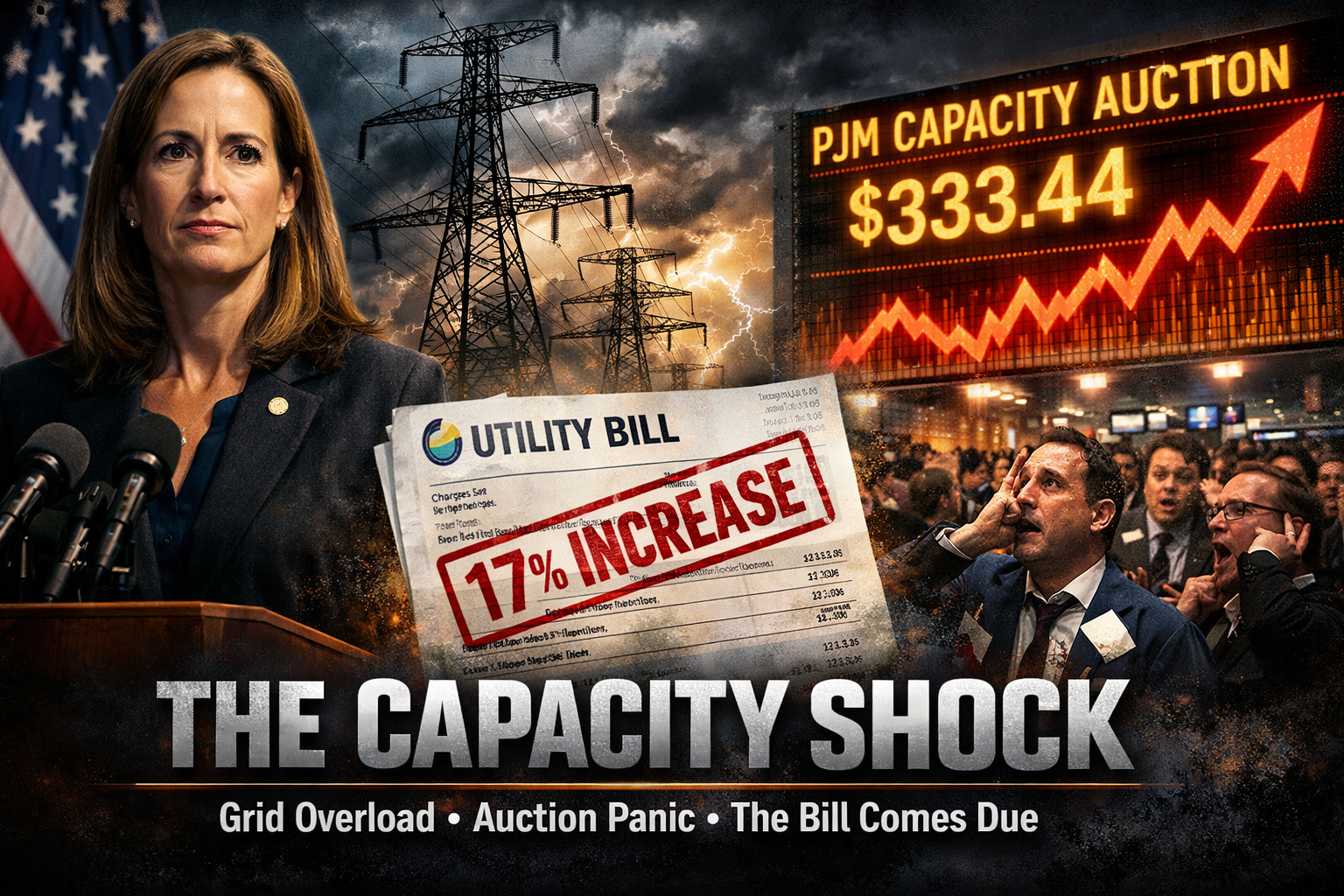
The auction for the 2025–2026 delivery year cleared at $269.92 per megawatt-day, up from $28.92 in the prior auction. In December 2025, PJM conducted the auction for the 2027–2028 delivery year. Prices hit the federal cap of $333.44 per megawatt-day.
PJM confirmed that data centers accounted for nearly 5,100 megawatts of the increased demand forecast driving that auction.
Who Pays the Price
Corporations do not absorb that multi-billion-dollar shock. Residential ratepayers do.
PSE&G passes supply costs directly through to customers. Beginning in June 2025, the average residential customer saw the electric supply portion of their bill rise by approximately 17 percent.
A household using 650 kilowatt-hours per month now pays roughly $27 more per billing cycle. That extracts more than $300 per year from a working-class family to subsidize private technology expansion.
State Officials Acknowledge the Strain
At a February 2026 Board of Public Utilities meeting, New Jersey Rate Counsel Brian Lipman acknowledged the ongoing impact of the rate hikes.
“This was a major source of pain last year,” Lipman said. “The pain is still there, but at least we’re not increasing it.”
Governor Mikie Sherrill elevated the energy crisis to a top priority upon taking office in January. She directed the Board of Public Utilities to issue residential universal bill credits by July 1 to partially offset PJM-driven price spikes.
Warning Signs Ahead
The current situation does not yet represent an immediate system failure. But it is an unmistakable warning.
New Jersey officials recognize the long-term risks posed by unchecked data center expansion and are attempting to shield utility customers from the most severe impacts.
Local governments, however, face a different kind of corporate extraction.
Part 3 of this series will examine how data center developers exploit legal loopholes to avoid property taxes, draining public school funding and municipal budgets across the state. Stay tuned
Sources
PJM Interconnection capacity auction results (2024–2026)
PJM Interconnection 2027–2028 Base Residual Auction report
Public Service Electric & Gas load growth and data center filings
New Jersey Board of Public Utilities public meeting records, February 2026
Office of the New Jersey Rate Counsel public statements
PSE&G residential rate filings and customer billing data